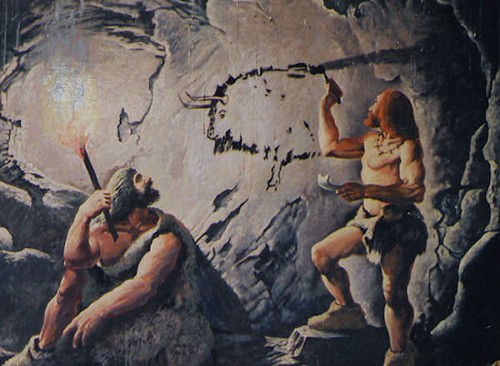
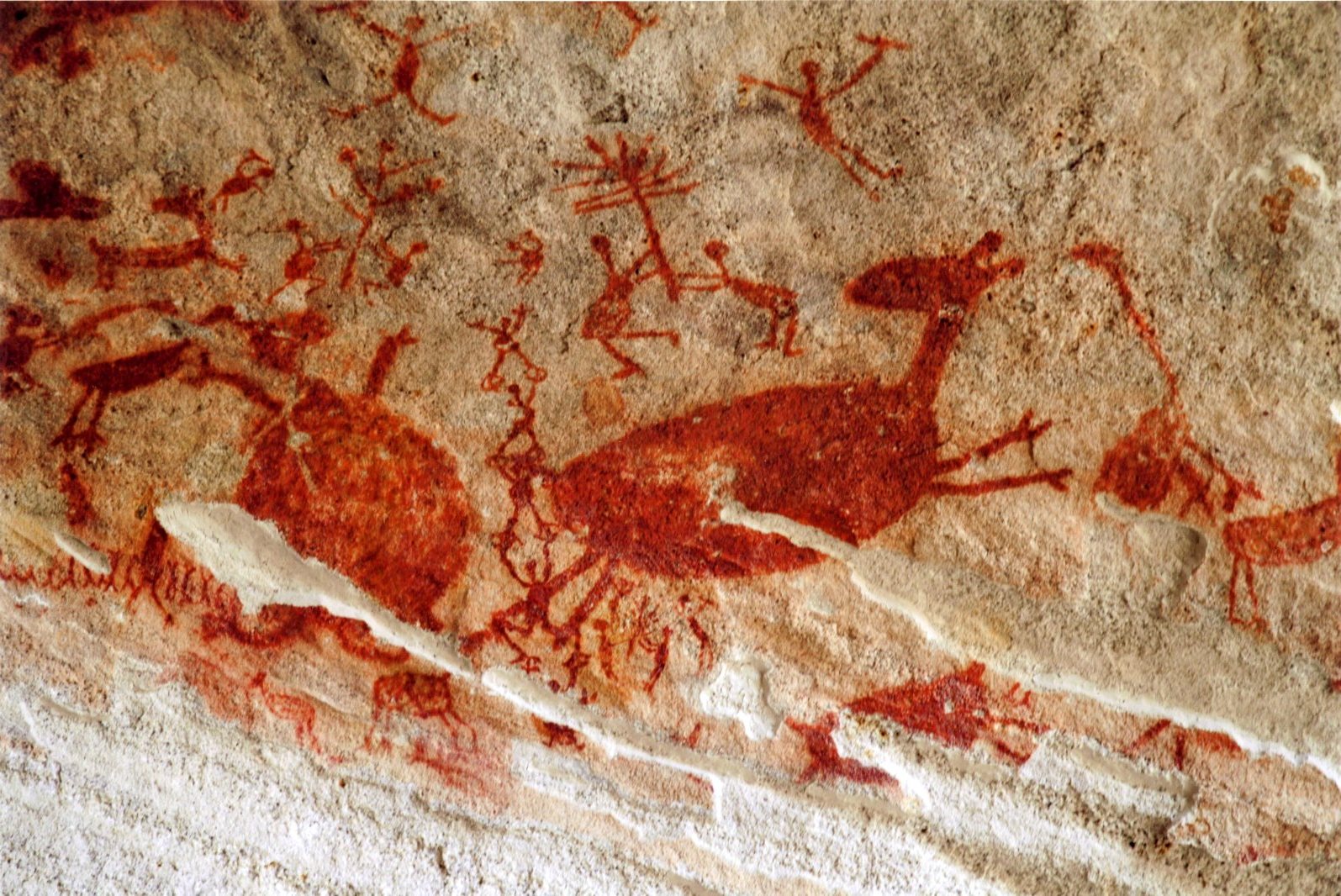
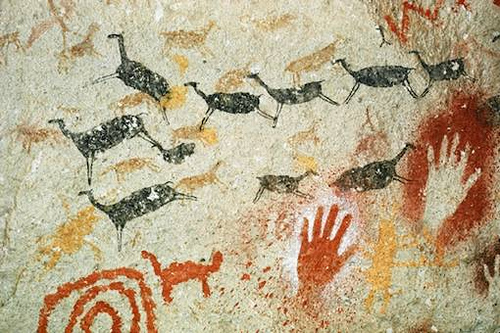
100,000 year old paint making workshop discovered

A new discovery was just reported in the New York Times of a
100,000 year old paint making workshop in a South African cave. The
archeologists found hundred’s of pieces of red ocher stone, special ocher
grinding stones, tools made from animal bones and large abalone shells where
the paint was mixed. Before this discovery, the oldest workshop discovered was
60,000 years old while the oldest cave art found was 40,000 years old (and the
most famous cave paintings in Lascaux,  France was only 17,000 years old).

paint in abalone shells

The cave is called Blombos, on a high cliff overlooking the
Indian Ocean (hence the abalone shells) on the tip of South Africa. These
paint makers blended the red ocher with the binding fat of mammal-bone marrow,
charcoal, quartz grains and an unknown liquid in the shells and then scooped it
out with bone spatulas. To read the NY Times article click here.

Share
Posted in earth art

Detoxing for Artists (and everyone else)

Even though I now have only natural art materials around, I have to admit that I spent most of my life bathing in turpentine and leaving heavy-metal laden paints on my skin to seep into my bloodstream. Noone ever brought up the subject in high school or art school or beyond so I didn’t worry about it. Even if I wasn’t an artist, just living on this planet means we need to detoxify or lesson our toxic load (since it’s impossible to completely detoxify). I went to a great class recently by two naturopaths who were also experts on detoxifying your system. They first told us that most humans on the planet have around 200 types of toxins in their body already and that there is no place on earth without toxins. Also, most newborn babies are born with around 170 types of toxins on their bloodstream (tested only minutes after birth).

The more you cleanse and take a few steps to detoxify, the better you feel- more energy, vitality, fewer colds, illnesses, diseases, the benefits are endless. I’ll mention a few of the daily and weekly detox habits that they suggested.

Daily: Releasing toxins from the skin: They begin every morning (or every time you shower) by dry brushing your entire body with a loofah mit or brush. It doesn’t have to take long, just 60 seconds or so. Then they coat their body with organic sesame oil. Next, they take a warm shower (no soap except on the underarms). Then they do a little water therapy by turning the shower to hot for 30 seconds (not scalding but just a little hotter than is comfortable), then cool for 30 seconds (not freezing, just refreshing), back to hot and then end with cool. This does alot to get those toxins out through the skin.

Weekly: Eat all fruits and vegetables one day a week, along with some good fats (coconut oil and olive oil).

Monthly: They also suggest seasonal cleanses that go much further.

painting with respirator - not fun

To learn how to detoxify your studio, go to my previous blog entry on “Non-toxic Oil Painting” to find out more.

Share
Posted in earth art

Nature Inspired Children’s Book

One page from upcoming Children's book

A new project in the works! I’m illustrating a sweet little children’s book by my friend, Myron, about how children can find fun and joy in nature without batteries, plastic or electronic gadgets. Just simple play in nature. I’ll let you know when it’s complete.


Share
Posted in earth art

Bring Nature Indoors

Japanese Maple Mural in Bathroom

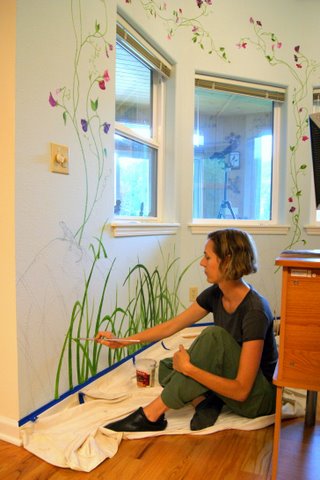
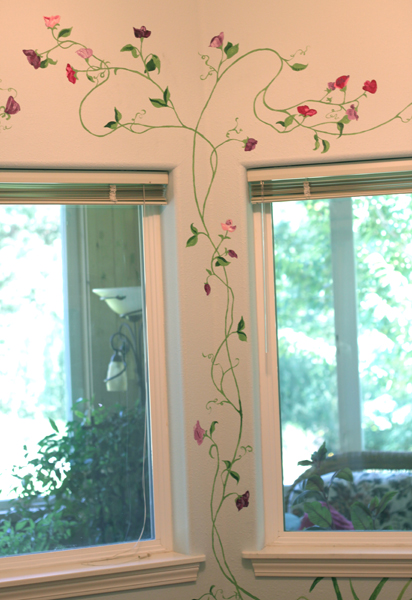
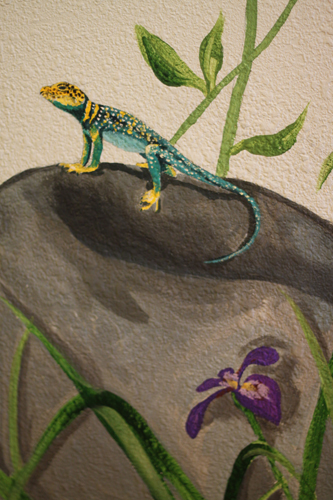
I’ve been having a wonderful time painting sweat peas, snakes, lizards, calla lilies and red maple trees in a private home this past week. I’ll be painting tree frogs in the entranceway next week!

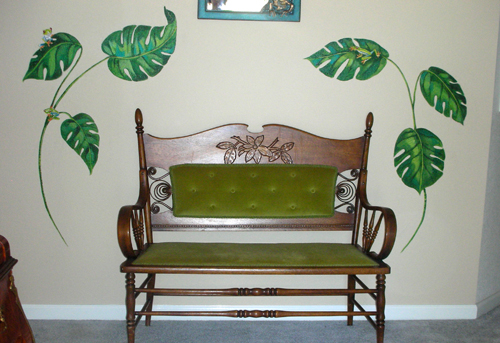
Tree frogs on philodendron leaves

Painting sweet pea vines

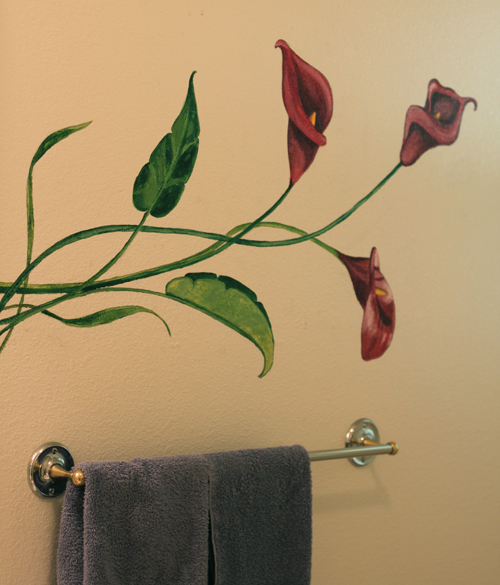
Burgandy Calla Lilies in bathroom

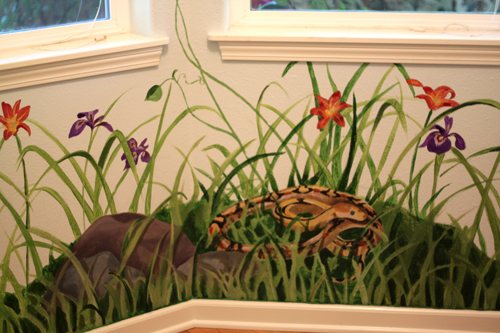
friendly snakes in the grass

sweet pea vines

collared lizard


Share
Posted in earth art

“Resurgence” Earth Art Article

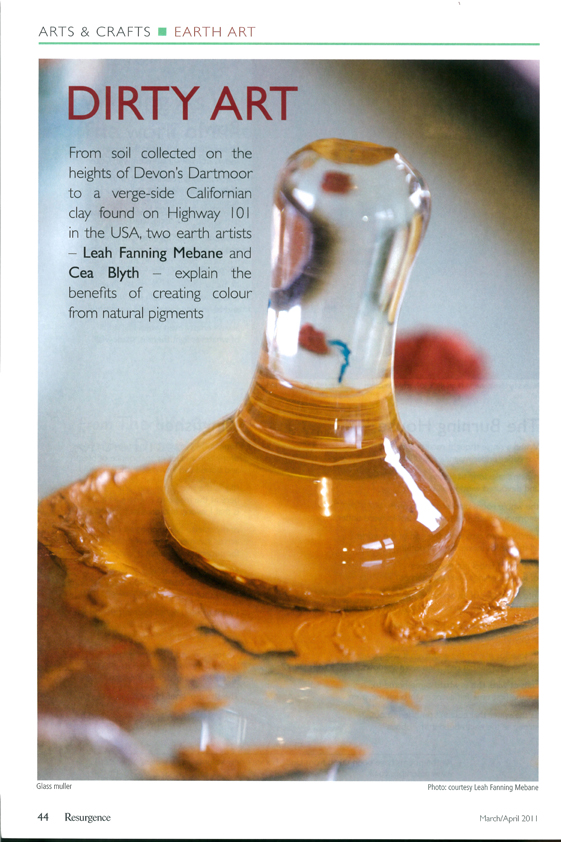
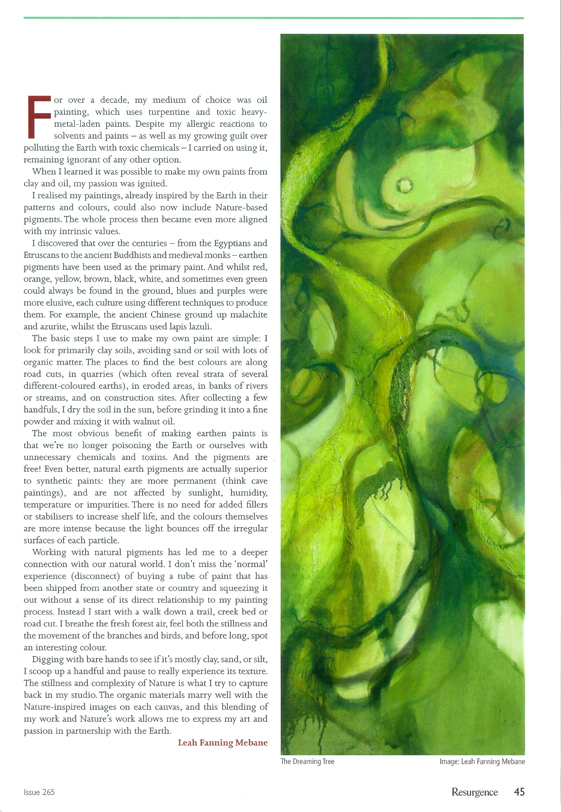
International, UK based, magazine Resurgence printed this article by myself and British artist, Cea Blythe. If you can’t read the text click HERE.


Share
Posted in earth art

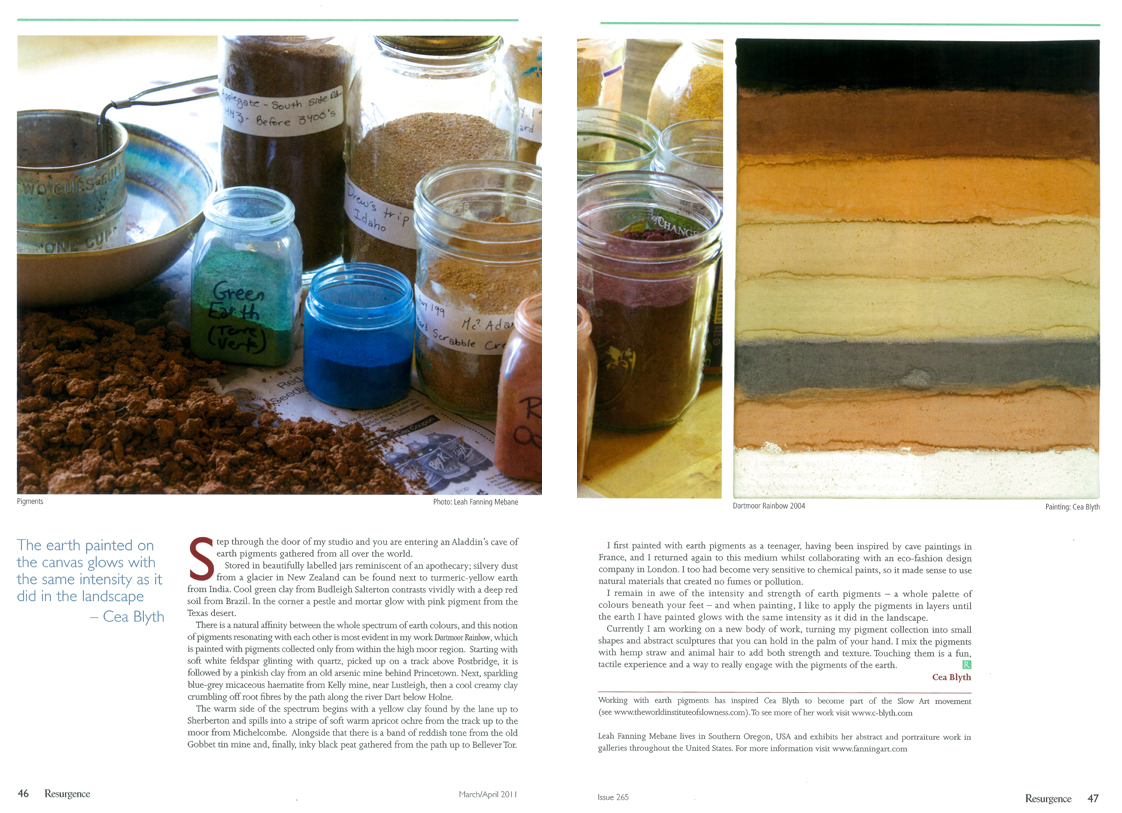
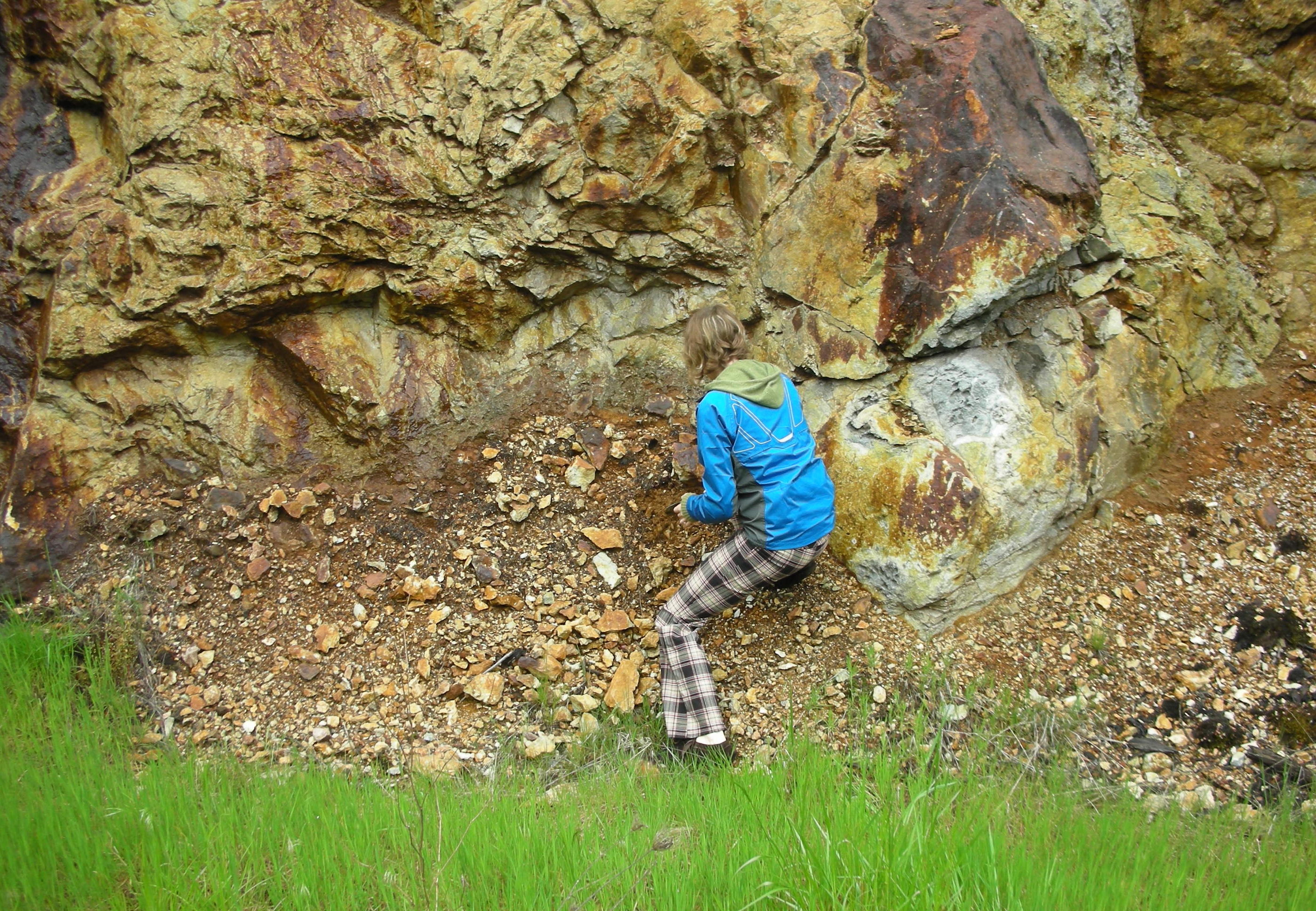
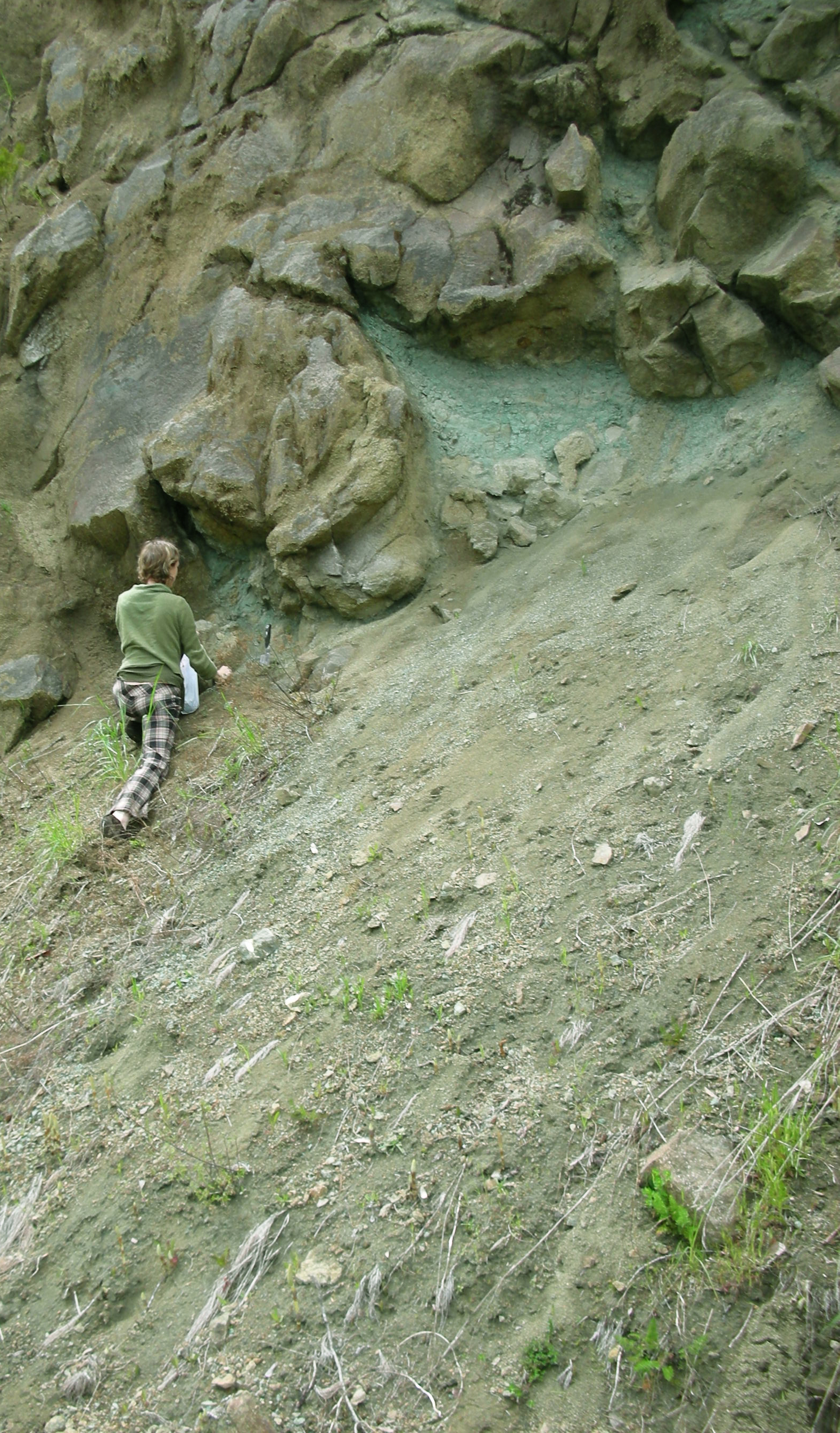
Collecting Earth Pigments

North Umpqua River Falls

My husband and I went up to the beautiful North Umpqua River this weekend to tour waterfalls but I discovered some great pigments along the way!

Some nice orange and yellows

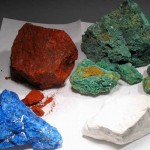
and a beautiful soft green clay

Share
Posted in earth art

Why is Earth Paint Sacred?

Well, it’s a well guarded secret by the Aborigines in Australia and it’s forbidden for anyone to talk about it, but there are many guesses. It was a general belief among Aboriginal cultures that the geographical features of the land were created by a mythical snake as it journeyed over it. The ochre seams were believed to be the “tracks” left by the snake through the earth, and therefore just one remove from touching that god-body.

There are probably as many dreamtime stories about red ochre as there are tribes, but most of them have the spilling of blood as the central theme. For example, one dreamtime story is about a handsome man named Kirkin who would stand on a high boulder at sunrise every morning and comb his golden hair, enjoying all the adulation and attention from others. Except one person, a healer named Wyju, who saw right through to his vanity. Kirkin hated him for this and plotted revenge. He tricked Wyju into leaping into a trap of spiked spears. Kirkin laughed while Wyju writhed bleeding into the earth. Ever since, the Aboriginals have gone to that specific valley for red ochre.
grinding pigment

Red ochre is an integral part of the initiation ceremony of young boys when they become men. In Arnhemland, novices are smeared with ochre in sacred clan patterns on their chests, with white clay masks on their faces. The paint is part of the secret initiation. Anthropologists say the red earth represents men’s blood (death) or women’s menstrual blood (birth) but there’s another theory that the iron in the red ochre acts as a kind of magnet to show Ancestors and Aboriginal people the way along sacred paths.

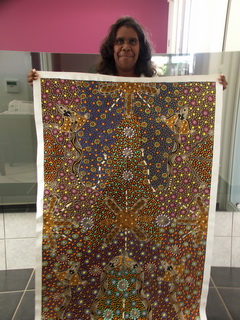
Recently, modern day Aboriginal art has become very popular around the world, selling for large amounts of money in major galleries and museums. But guess what type of paint they use- acrylics! Perhaps this makes it less complicated for them to represent their secret and sacred Dreaming stories for outsiders if the materials themselves are not sacred. As if by changing the paint, the designs begin to lose the things that make them dangerous and powerful.
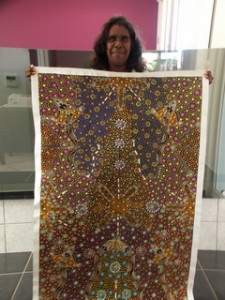
contemporary Aborigine art

*info from “Color” by Victoria Finlay

 

Share
Posted in earth art

The Aboriginal Ochre Wars

Aboriginal Ochre Pit in Central Australia

At one time, all of Australia was a huge network of trading posts. And good ochre pigment was one of the most prized items to trade. “Wilga Mia” in Western Australia is one of the most sacred ochre mines on the continent. If you want to collect any you have to ask permission from the traditional aboriginal owners and also from the sacred beings who live beneath it’s ancient chambers. It was still being mined and traded in the 1980’s, although by the end of the 20th century it was being collected in plastic buckets instead of bark dishes.

In the Flinders Ranges of South Australia, there’s another famous ochre deposit. For thousands of years Aboriginal expeditions (70-80 men) would walk for two months to travel the thousand- mile round trip to collect their red-gold ochre at a place called Parachilna. They would return with 20 kilos of ochre each in possum or kangaroo skin bags, and on their heads they’d carry huge grinding stones from a nearby stone quarry.

Then in 1860, guess what happened, you guessed it, the white guys arrived. Farmers arrived with land and sheep ownership claims and obviously didn’t want the Aboriginals to eat their sheep or walk across their land. But the natives continued to take sheep meat for their journey and walk across their land which soon became punishable by hanging. In 1863 there was an “ochre massacre” when scores of Aboriginals were killed by angry settlers. Then someone from the South Australian administration suggested a solution! They decided to “move the mine to the Aboriginals” so they wouldn’t have to make the journey. But they moved the wrong mine.  They removed four tons of ochre from a mine owned by another tribe on the coast and spent weeks hauling it back. It was a completely wasted effort because the Aborigines wanted none of it.

 The white settlers missed the point that it was a pilgrimage involving elaborate ceremonies in collecting the ochre and bringing it back. Also, the sacred ochre was essential for trading which happened when one item is seen as equal in value to another. But free ochre had no value. And lastly, the sacred ochre was used for painting ritual designs and this other ochre from the coast was not good enough or sacred enough and didn’t contain the hint of mercury that made it sparkle.

  • info from “Color” by Victoria Finlay
Tasmanian Ochre Mine

Share
Posted in earth art

Native Americans and Earth Paint

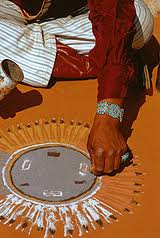
Ochre was the first color paint on this planet. It has been used on every inhabited continent since painting began, and it’s been around ever since, on the palettes of almost every artist in history. In Swaziland, archaeologists have discovered mines that were used ATLEAST 40,000 years ago to excavate red and yellow pigments for body painting. Native Americans are known for their body paintings and I just read that the first white settlers in N. America called them “Red Indians” because of the way they painted themselves with ochre. It acted as a shield against evil and also protection against winter cold and summer insects. Like the Aboriginals in Australia and most indigenous cultures, they considered ochre sacred and infused it into their everyday objects like clothing, tools, pottery, rawhide, etc. Trade for pigments among tribes and later with European traders expanded their palette of colors. The ancient art of Sand Painting among tribes in the Southwest took advantage of the great geologic range of natural colors in their environment and was a form of religious expression. In its original form, Sand Paintings were created to exist only a few hours. But a movement by Native Americans in the latter half of the 20th Century created permanent Sand Painting as an art form.

Navajo sand painting

Make a Sand Painting

Ingredients

  • 1 cup Craft Sand
  • 1 teaspoon earth pigment

Place sand in a glass jar (not plastic) and add the desired amount of pigment. The amount given is only an approximation. Shake vigorously to coat.

Since pigments are not dyes, their fine particle size mixes with the sand to coat it, but does not actually dye it. Therefore this is not a colorfast application. However, coloring sand by hand and choosing single or combinations of pigments gives you an infinite range of colors that cannot be matched by store bought craft sand.

Tips for sandpainting

  • Work with only one sand color at a time. Finish all areas of that color before proceeding to a new color.
  • It is preferable to do dark colors before light ones.
  • Upon completion of all colors, you may notice some powder or sand has invaded other areas of a different color. The use of a can of compressed spray air, such as that used to clean computers (found in Office Supply) will blow this excess off once all areas are completely dry. Compressed air is also useful for dusting and cleaning sand paintings.
Share
Posted in earth art

What is ochre?

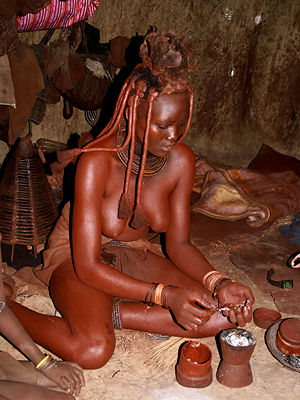
Himba woman covered in red ochre

There seems to be confusion in all the books and articles I’m reading about the word “ochre”. Some say it’s just a specific color, some say it means “earth pigments” or colored clay with many possible colors and some say it means iron oxide. I think the general consensus is that ochre means any natural earthy pigment with iron ore in it. It could be brown, red, orange, or yellow or any shade in between. And “natural earth pigment” means any colored clay with certain natural occurring minerals (including iron oxides) that give it various colors.

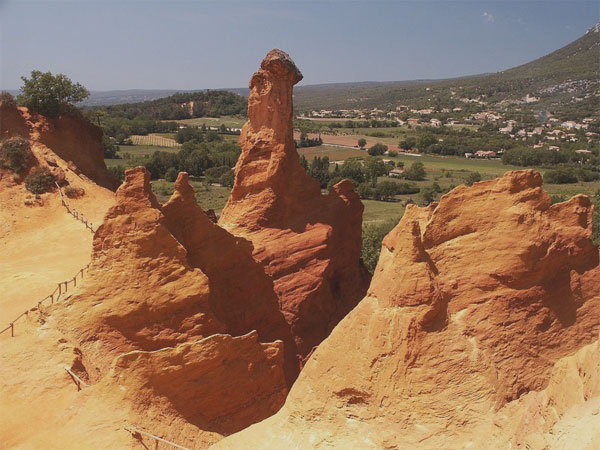
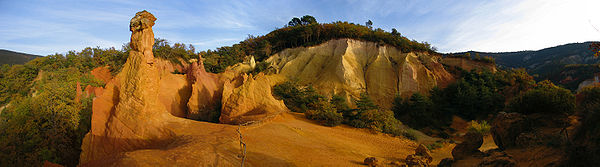
Rustrel ochre mine

Share
Posted in earth art